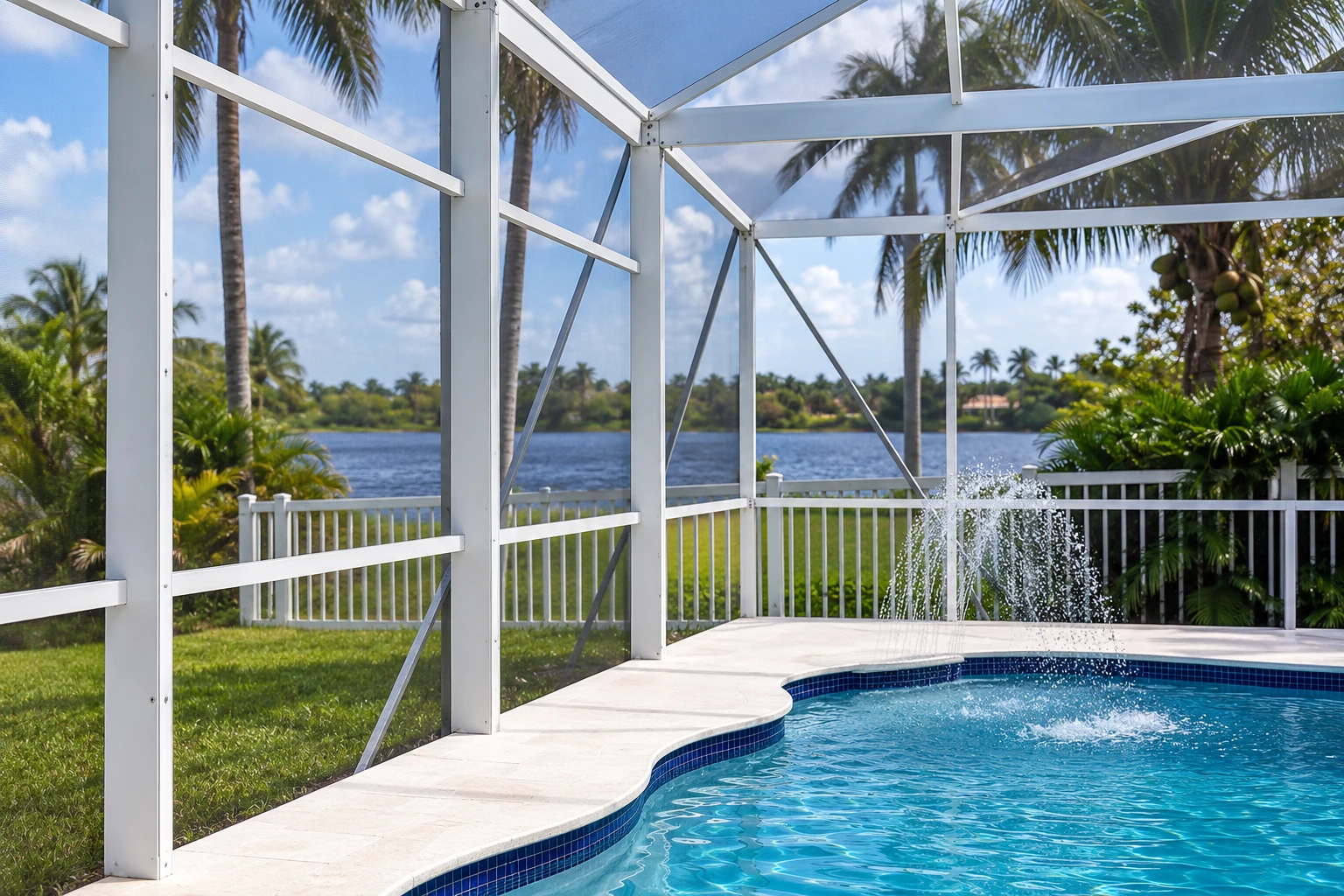
Concrete Sidewalk Building in Mountain View CA - a level walk that isn't slick when wet
Cracked, heaved or sloping walk catching your toes? We build a new concrete sidewalk on packed ground, with planned joints and a textured finish.
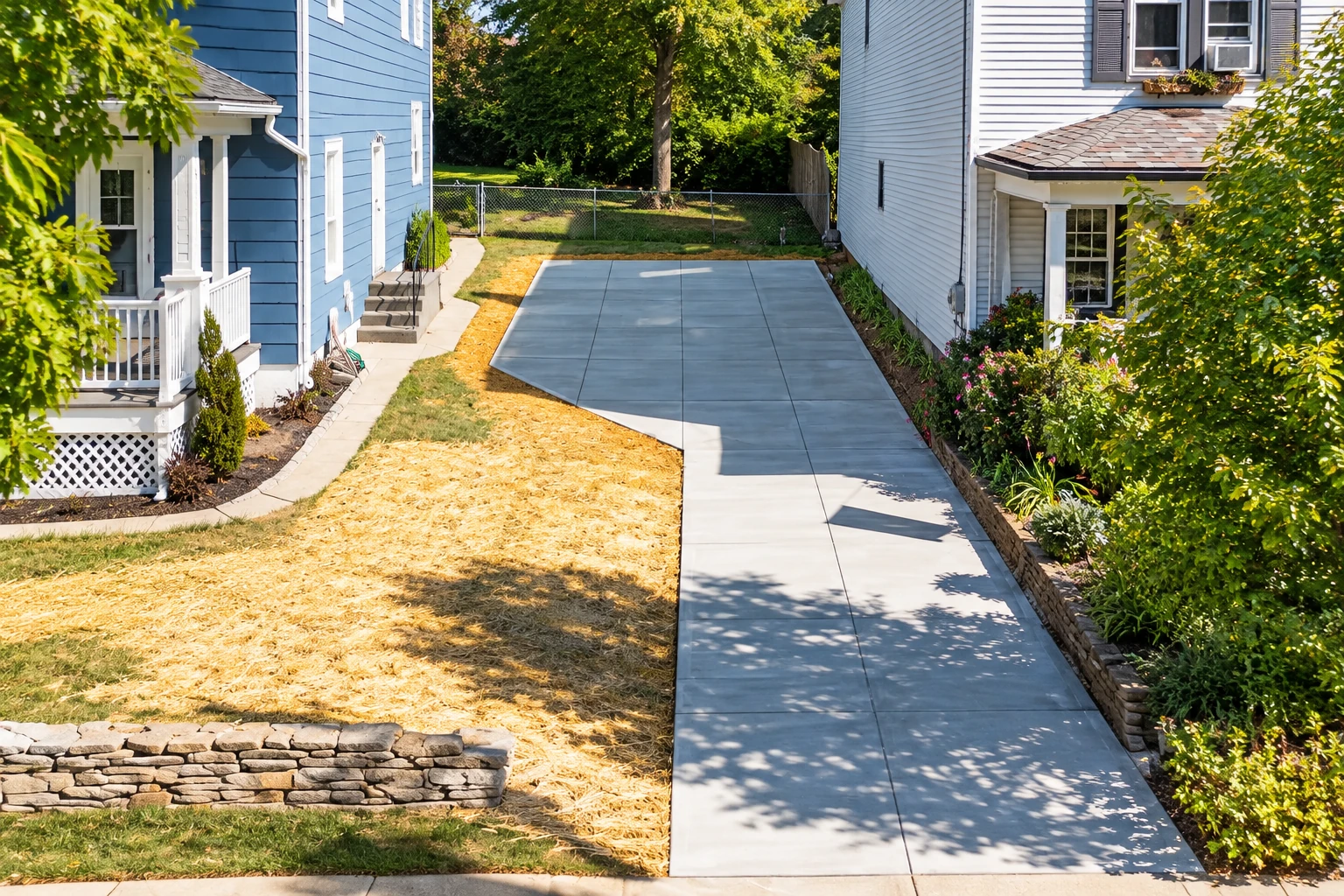
Old walk tripping people up? Concrete sidewalk building starts with the ground.
Concrete sidewalk building in Mountain View, the way we do it, means pulling out the topsoil and roots, packing the ground, and setting a walk that meets your doors, driveway, curb and the way water already runs across the yard. The subgrade, the dirt the walk sits on, decides more than the concrete does.
Most walks we tear out failed from below. A base raked flat instead of dug out and packed settles with the dirt, roots lift panels into a trip edge, and a walk tipping toward the house sends rain at your foundation. If the budget's tight, I'd trim the finish before the base, because a bad base can't be fixed without tearing the walk out.
Price moves with the walk's length and width, how much old concrete and dirt we haul off, any stretch a car crosses, and the finish, from a plain broom finish with light grooves for grip to decorative concrete. Timing turns on the tear-out, the weather and curing, the wait before you use it. My written estimate gives you your own figure.
Know when it's time. Signs you need a new concrete sidewalk.
A panel lifted near a tree
Roots under a walk keep growing, so a raised edge usually gets taller every year. Grinding it down hides the step for a while, but the root is still down there pushing.
Water pooling on the walk
That usually means the walk settled or was set with the wrong tilt. Standing water wears the surface and gets slick, and when it runs toward the house it soaks the ground by your foundation.
Cracks and crumbling edges
Cracks running every which way and a dusty, flaking top often point to a soft base, joints cut late or skipped, or a pour in midday heat. Patches rarely hold once the slab under them is moving.
A sidewalk job, step by step. Here's what happens when you call.
I come out myself and walk the route with you, looking at nearby trees and any stretch a car drives over, because both change how we build it. I'll ask where water goes in a storm. If the garage slab beside the walk is cracked too, I can look at garage floor concrete on the same visit.
My written estimate lays out the route, the finished heights and the side-to-side tilt, which get set before anyone digs, and the texture we plan for the top. Where a car crosses, that section is usually built thicker or with rebar, steel bars that help the concrete hold together, and the estimate shows how we'll handle it.
Once you're ready, our lead hand runs the crew. We dig out the old walk and soil, pack the base, set forms, pour, finish and cut the joints, and I check in at the key steps along the way. Then we clean up and walk the finished sidewalk with you.
Need a new concrete sidewalk? Tell us about your walk.
Send the rough length, nearby trees and any spot cars cross. We reply within one business day to set a free on-site estimate, no obligation.
(650) 447-1063Sidewalks in Mountain View. We build them nearby too.
When a sidewalk needs a permit, we handle the paperwork with your city's building office and set up the inspections, and if it's unclear, we check with the city before we schedule anything. Wherever a California city or county requires a permit, the contractor has to sign a statement of a valid license and its number, which protects you. Tell me if the walk runs along the street, since we'd ask the city about that first.
We build walks the same way across Mountain View and in many cities around it, including Sunnyvale and Los Altos, wherever a walk has to run past a big tree or cross a driveway.
Sidewalk questions, answered plainly. Start here before you call.
Here are straight answers about building a new sidewalk. If yours isn't covered, call (650) 447-1063 and I'll talk it through with you.
Who is allowed to build a concrete sidewalk in California?
A contractor licensed by the state licensing board for concrete work, which covers forming, pouring and finishing flatwork, the flat slabs like walks, patios and driveways. Minor jobs under $500 in total, labor and materials, are exempt, but not when they're part of a larger project. We're fully licensed and insured.
Will tree roots move my new concrete walk?
They can, because roots and ground that swells and shrinks keep moving a walk for years. Near a tree, where the walk runs and how the ground under it is prepared usually matter more than stronger concrete, which is why we settle the route on site before anyone digs.
How much can a contractor ask for up front on a sidewalk?
In California, the down payment on a home improvement contract can't be more than $1,000 or ten percent of the contract price, whichever is less. It's a state rule written to protect you, and it applies to any contractor you hire for the job.
How do I keep a new concrete sidewalk from cracking or getting slippery?
Plan the joints and the finish before the pour. Control joints, the grooves that split a walk into panels, have to be tooled or cut early so they guide where cracks form, and we give the top a texture so it isn't slick when it's wet.
Sidewalk or driveway on your list? Call us for a look.
Tell us what the walk needs to connect, door to driveway or gate to curb, and we'll set a time to come look at it with you.
Mon–Fri: 7 AM–9 PM, Sat–Sun: 6 AM–9 PM