Slab foundation building in Mountain View CA - matched to the soil on your lot
Building a new home or addition and unsure what your ground will do? We start with the soil and pour a slab that suits it.
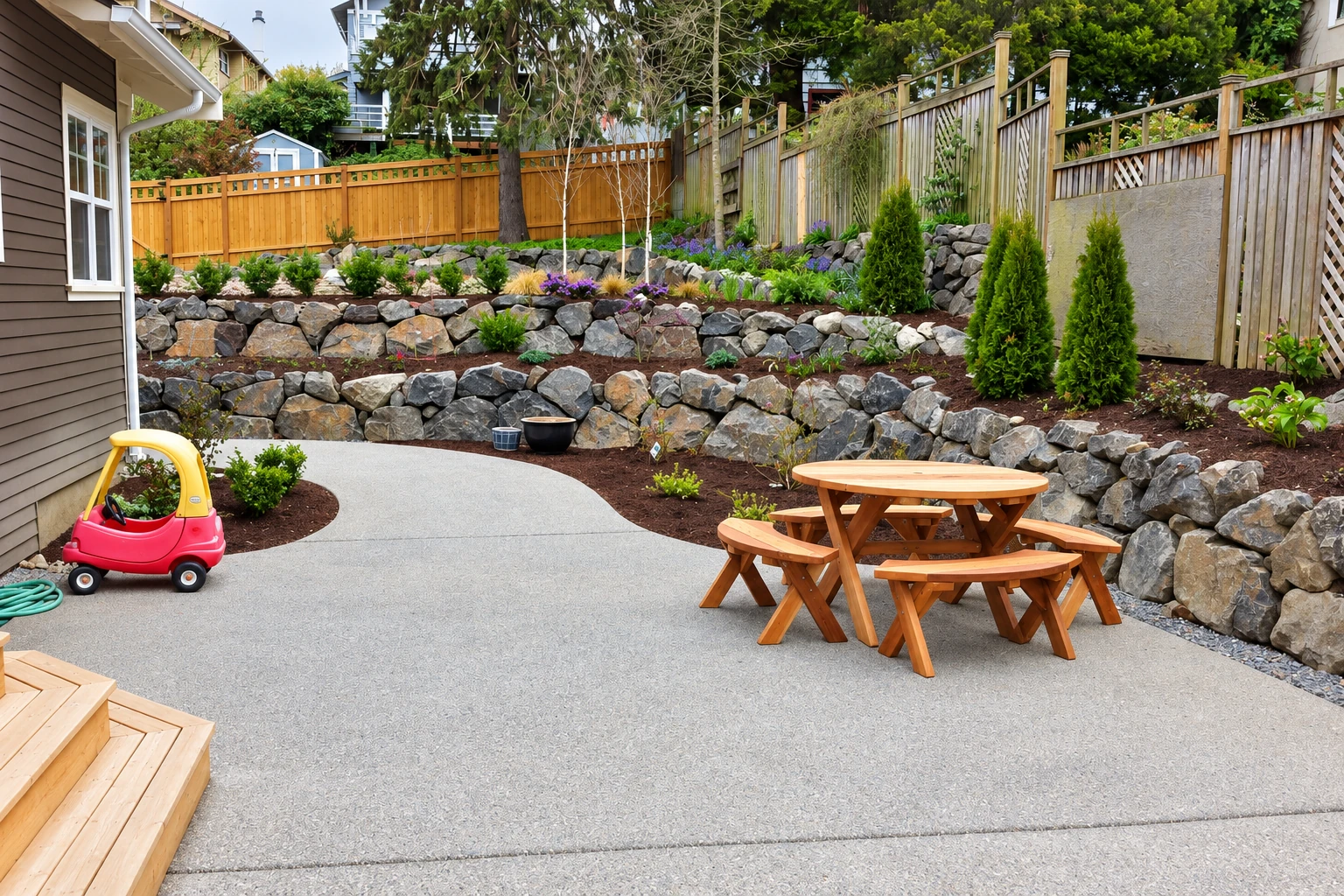
A slab foundation carries your whole house. The soil decides how.
A slab foundation is concrete poured right on the ground to carry your house, and we build them in Mountain View from the first form board to the finished surface. If your plans call for a different kind of foundation, that's our foundation installation work.
The trouble usually starts under a slab, not on top of it. Expansive soil swells when it gets wet and shrinks as it dries, and a slab poured without planning for that tends to crack and shift with the ground. That's why I want a check of your actual lot's soil before we talk slab type.
What moves the price is what the soil report calls for, the slab type and size, and how much digging and grading the site needs. The schedule turns on that report, the engineering and the weather on pour day. We're fully licensed and insured, and the written estimate lays out your job.
Your lot gives clues. Read them before the slab foundation goes in.
Ground that cracks when it dries
Cracks that open in dry months and close after rain usually mean soil that swells and shrinks with water. A slab built without accounting for that tends to move right along with it.
An old slab that's tipped or split
A garage floor, patio or walk on the lot that has lifted at one edge or split across tells you the ground has been moving. It's better to learn why before you pour something bigger.
Water sitting where the house goes
Puddles that linger after rain mean the ground there gets wet unevenly, and unevenly wet soil pushes unevenly on a slab. Drainage is far easier to plan now than to fix under a finished floor.
Here's how a slab foundation job goes. It starts with a visit.
I come out myself to walk the lot, look over your plans and ask plenty of questions, because a slab that ties into something odd or sits where water runs needs working out first. If there's no soil report yet, I'll point you toward getting one, since the design is built around it.
Then I send a written estimate that lays out the slab, the prep and anything still open until the report or the engineer settles it. When the job needs a permit, we handle the paperwork with your city's building office and set up the inspections, and if it's unclear, we check with the city before we schedule anything.
Once you're ready, our lead hand runs the crew, digging out and packing the subgrade, the ground the slab sits on, then setting forms and steel and pouring. I check in at the key steps, since that buried work holds everything up and is the last place I'd trim a budget. We clean up and walk the finished slab with you. Satisfaction guaranteed on every job.
Building on a new lot? Tell us about your slab foundation.
Send your address and any soil report for the lot. We reply within one business day to set a visit, and the estimate is free with no obligation.
(650) 447-1063Slab foundations in Mountain View and nearby. Your ground decides a lot.
California maps earthquake hazard zones for fault rupture, quake-triggered landslides and liquefaction, where soil briefly turns to quicksand. The state says building in those zones triggers geologic and engineering investigations that can find and reduce the hazard before construction, and that work fits right in with the soil check we want first.
We're based in Mountain View and pour slabs there and in cities like Sunnyvale and Los Altos, for homeowners and for owners of small commercial lots who also call us for concrete parking lot building.
Questions about slab foundations? Here are straight answers.
Read through the answers below before you call. If your question isn't covered, give us a call and I'll talk it through with you.
Is a post-tensioned slab right for my lot in Mountain View?
It can be, especially if your soil swells and shrinks with moisture, and your soil report is what tells us. The post-tensioning trade group says these slabs are held under a built-in squeeze, called compression, which resists the strain shifting soil puts on them better than a regular slab does. I'll go over the options once I've seen the report.
Will my new slab foundation crack or move over time?
Some movement is normal, especially on expansive soil. Engineers who study slab problems write that a slab on that kind of soil with no movement and no cosmetic flaws would cost too much and likely couldn't be built at all. We can take elevations right after we finish, so you have a starting record to compare against later.
Should my lot's soil be checked before the slab goes in?
Yes, a check of your actual lot's soil should guide the slab design, because soils differ in how much they swell, shrink or compress. If your lot falls in one of the state's earthquake hazard zones, the investigations mentioned above are part of that work. If you don't have a report yet, I'll point you toward getting one.
Which California license covers concrete foundation work?
The state contractor licensing board lists a concrete contractor class for work that forms, pours, places and finishes concrete. That class doesn't cover contractors whose only business is placing reinforcing steel. It's fair to ask any contractor you're considering which license they hold.
Planning a new home or addition? Call Precision Mountain View Concrete.
Tell us where the lot is and what you're building, send the plans if you have them, and we'll set a time to come look.
Mon–Fri: 7 AM–9 PM, Sat–Sun: 6 AM–9 PM